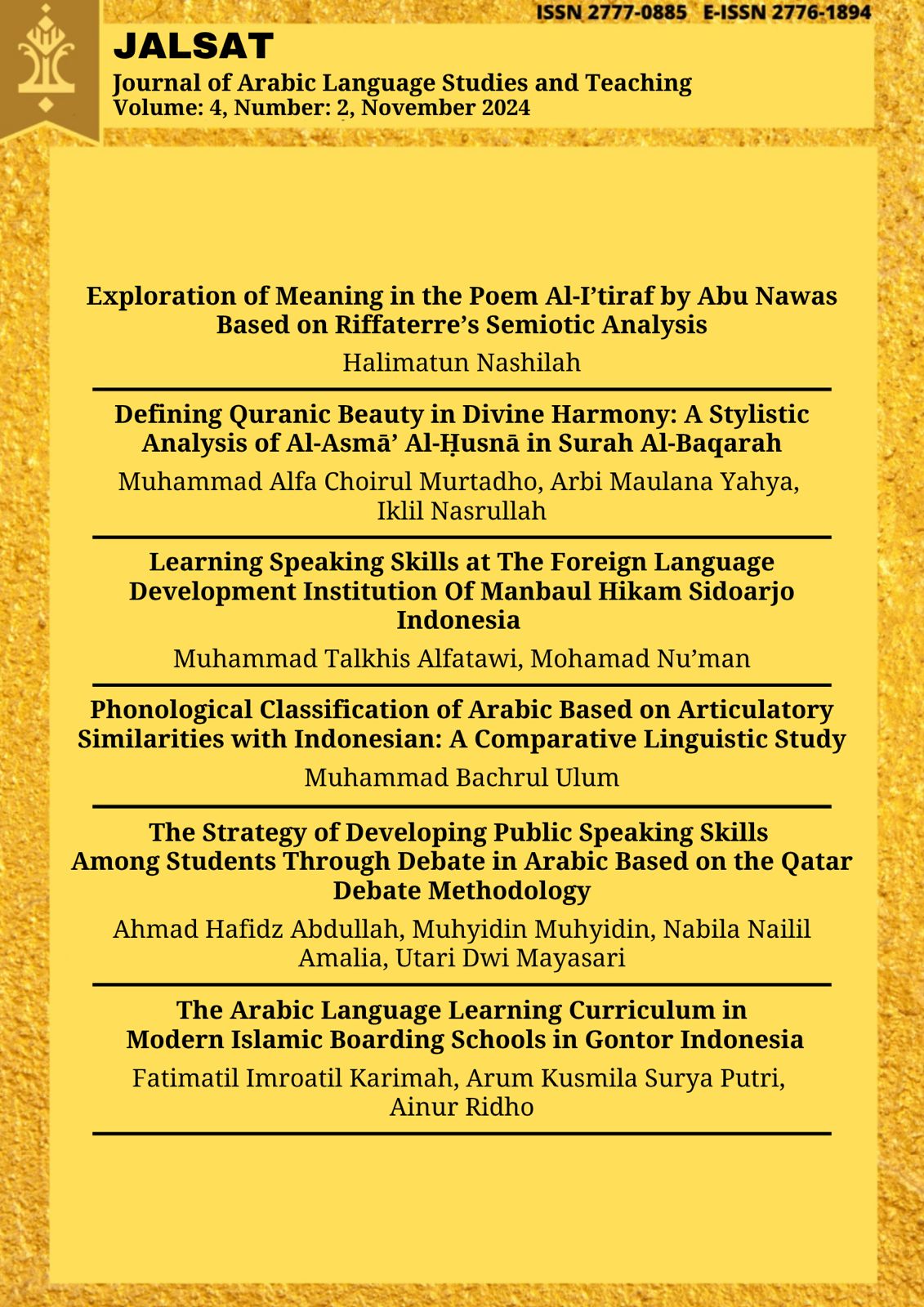
Defining Quranic Beauty in Divine Harmony: A Stylistic Analysis of Al-Asmā’ Al-Ḥusnā in Surah Al-Baqarah
DOI:
https://doi.org/10.15642/jalsat.2024.4.2.146-160Keywords:
Arabic Stylistic, Al-Qur'an, Al-Asmā’ al-ḤusnāAbstract
This article delves into the stylistics features of the Arabic language in the Qur’an, focusing specifically on Surah Al-Baqarah, verses 115 to 130, which highlight Al-Asmā’ al-Ḥusnā, or “the most beautiful names.” These divine names embody the exalted qualities of Allah and provide a pathway to understanding His essence. Through a stylistic lens, the article investigates how various linguistic devices such as metaphors, alliteration, and repetition serve to amplify both the message and the aesthetic appeal of these verses. The analysis reveals that each name not only conveys a unique meaning but also enriches the broader narrative and spiritual framework of Surah Al-Baqarah. With its profound linguistic artistry, the Qur'an encourages readers to contemplate the deeper significance of Allah’s names, fostering a greater connection to their faith and spiritual comprehension. This study seeks to offer fresh insights in Qur'anic scholarship and promote a deeper appreciation of the linguistic beauty inherent in this noble text.
Downloads
References
Agustiar, A., & Jamal, K. (n.d.). Structural Analysis And Stilistic Meaning Of Khabariyah Verses In The Qur’an. Jurnal Ushuluddin, 29(2), 176–188.
Al-Zuhayli, W. (2003). Al-tafsir al-Munir fi al-aqidah wa al-syari’ah wa al-minhaj. Dar al-Fikir.
Chasbullah, A. C., & Wahyudi, W. (2017). Deradikalisasi Terhadap Penafsiran Ayat-Ayat Qital. FIKRI: Jurnal Kajian Agama, Sosial Dan Budaya, 2(2), 407–424.
Damhuri, D. (2014). Struktur Bahasa Al-Qur’an: Membangun Elemen Stilistika Kebahasaan Dalam Al-Qur’an. TAHKIM, 10(1).
Dani, A. R. (2023). Gaya Bahasa Dialog Al-Qur’an “Analisis Stilistika Atas Dialog Al-Qur’an Mengenai Hari Kebangkitan. Jurnal Sosial Dan Sains, 3(3), 258–270.
Hakim, M. A. (2010). Stilistika Morfologi Al-Quran Juz 30. LiNGUA: Jurnal Ilmu Bahasa Dan Sastra, 5(1).
Hanif, M. (2018). Kisah Nabi Yusuf Dalam Al-Qur’an; Kajian Stilistika Alquran Surah Yusuf. Al-Af’idah Jurnal Pendidikan Dan Pengajaran Bahasa Arab, 2(2), 1–27.
Kathir, I. (1992). Al-Uslubiyah wa al-Bayan al-‘Arabi. Beirut: al-Dar al-Misriyyah al-Lubnaniyah.
Miswar, A. (2017). Sejarah Perkembangan Tafsir al-Qur’an pada Abad ke VII H. Rihlah: Jurnal Sejarah Dan Kebudayaan, 5(1), 109–120.
Mulyadin, A. (2022). Stilistika Alquran Dalam Kisah Luqman Dan Implikasinya Terhadap Cara Mendidik Anak. Al-Ibanah, 7(1).
Muzakki, A. (2009). Stilistika al-Qur’an: Gaya Bahasa al-Qur’an dalam konteks Komunikasi. Malang: UIN Malang.
Qalyubi, S. (n.d.). Memahami Alquran Dengan Pendekatan Stilistika. Bahasa, Sastra, & Budaya, 1.
Qalyubi, S. (2017). Stilistika Bahasa dan Sastra Arab Yogyakarta. Idea Press.
Qalyubi, S., & Maimun, M. (1997). Stilistika al-Qur’an: pengantar orientasi studi al-Qur’an. (No Title).
Setiawan, M. R., Al-Gumaei, A. M. A., Herman, H. F., & Wangsadanureja, M. (2023). Al-Aqwāl At-Tafsīriyyah AllatīKhōlafa Fīhā Aṣhāb Al-Mukhtaṣor Al-Imām Aṭ-Ṭobari Min Al-Juz Al-Hadī ‘Asyar Ila Al-Juz As-Sādisah ‘Asyar: al-Aqwal al-Tafsiriyah allati Khalafa fiha Ashabu al-Mukhtasar al-Imam al-Tabari. Proceeding Of The International Conference On Qur’anic Studies And Tafseer, 2(1), 438–456.
Shihab, M. Q., & Shihab, N. (1998). Menyingkap tabir Ilahi: asmā al husnā dalam perspektif al-Qurʼan. Lentera Hati.
Singarimbun, M., & Effendi, S. (1995). Metode penelitian survei.
Taufiqurrohman, M. A., & Nashoih, A. K. (2021). Gaya Bahasa Dialog Nabi Musa Dan Nabi Khidr Dalam Surah Al-Kahfi (Kajian Stilistika Al-Qur’an). Al-Lahjah: Jurnal Pendidikan, Bahasa Arab, Dan Kajian Linguistik Arab, 4(1), 423–446.
Downloads
Published
How to Cite
Issue
Section
License
Copyright (c) 2024 Muhammad Alfa Choirul Murtadho, Arbi Maulana Yahya, Iklil Nasrullah

This work is licensed under a Creative Commons Attribution 4.0 International License.